From Page to Screen
In an effort to not rot in front of the TV or doom-scroll for hours every night—which I’ve found myself doing more and more in the few hours I have to myself—I’ve made a very conscious effort in pivoting to other forms of entertainment to unwind.
Based on the activeness of this blog, I guess you can tell I haven’t written much—again, something I’m conscious of, am trying my best to course correct, and thus this blog—so I’ve turned to my other neglected love.
Reading.
Reading has always been paramount in my life. I’ve always had 3 or 4 books going at the same time. I never travel without several packed away—I recently made the mistake of going on a getaway with only one, and I finished it by day 3 of a 5 day trip, and then was stranded. And I always have the next book prepped and ready—aside from that recent travel slip-up. My voracious reading habit solidified my fate; I didn’t just want to read the stories, I wanted to write them. So, I never thought that my favorite past time would take a backseat to….well….life.
Kids really drain you, right?
Last year improved after I guilted friends into a quarterly wine-and-book club—one book every four months isn’t enough for a former avid reader. Since December I’ve been turning off the TV and reading at least half an hour nightly. It’s reduced my stress and helped me sleep; my sweet husband has been supportive and even bought me two Christmas books—one a surprise prequel to a favorite trilogy, the other a long-sought 25th-anniversary edition. The second blew me away.
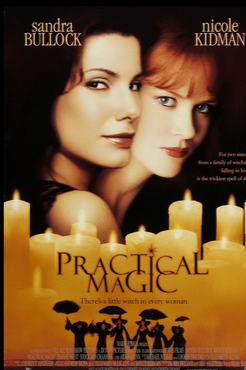
What book?
Practical Magic by Alice Hoffman.
Alice Hoffman is one of my favorite authors. I’ve read almost everything—except Practical Magic. I started it in seventh grade when my best friend lent it, got unnerved by the first hundred pages, and never finished. She was shocked I’d never read it, especially after I devoured Hoffman's prequels, The Rules of Magic and Magic Lessons, and lent them to her. With a sequel movie featuring the original cast due next fall, my husband urged me to return to the Owens women.
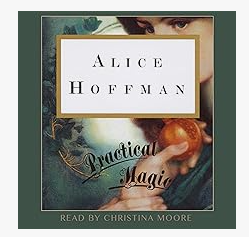
So, a week ago I cracked the spine, fully expecting to be reunited with an old friend.
Instead, I found myself stepping across a semi-unfamiliar threshold; the words I was reading, the paragraphs and detail, were not what I anticipated. Which left me really, really confused. Disappointed even. This can’t be it, I thought. There was a split second where I convinced myself that the print I held—the 25th anniversary—was an abridged version of the original. Like an amended version or something? Obviously ridiculous; who would read a substitute version when you could read—and watch—the original best seller. I wracked my brain for a memory of the first time I half-read it; I could only remember a glimpse of the evil Jimmy Hawkins (aka Jimmy Angelo ala the movie) and the urge to stop reading it all together.
Confused? Let me explain.
From the first few pages, I noticed a definite shift in the narration and pacing of the plot. The movie version is told in a very linear form; the story begins with multiple flashback scenes from the past, with voice-over narration from the aunts. It sets the framework of the major plot point—Maria Owens and the Owens’ Family Curse—that eventually bleeds into the modern day plot and Maria’s descendants, Sally and Gillian. It’s straight forward and told chronologically. The book is very different. The book follows a third person omniscient POV—an all knowing, disembodied narrator—and the timeline is all over the place. Depending on who’s POV we’re inhabiting, the narration flashes back to the past with no clear indicators, and completely flips POV with abandon. Very reminiscent of William Faulkner’s use of stream of consciousness; a character will name drop or mention a situation haphazardly, then the POV will flip into that character’s perspective. Which can be disorienting, especially if you aren’t paying close enough attention.
GUILTY!
Does that mean the use of this POV is ineffective, or that I didn’t like it? Not necessarily. I’ll be honest: I HATED William Faulkner because of his use of stream of consciousness. I took a course in Southern Gothic literature in school and barely got through The Sound and the Fury. That bias aside, I didn’t mind Hoffman’s use of it once I got used to the style. It took me a while to fully grasp the technique and to appreciate the writing style she was using. It’s actually a creative way to tell a very complicated, rich story and to give the middle finger to normal storytelling conventions. Obviously, a movie couldn’t really do the same without losing half of its audience. Pivoting to a more linear, conventional storytelling pace made a lot more sense for the big screen.
The differences don’t end there.
Since I’m not overly concerned about revealing major spoilers or plot points from a movie that came out 25 years ago, I’ll happily share some of my observations. Plus, this is basically my favorite thing to do with a book-to-screen adaptation. So buckle up, buttercup!
The Maria Owens/Owen’s Curse-of-it-all
A pivotal storyline and conflict—one that virtually the entire movie is built around and that, unless I completely glossed over it, is not mentioned in the book. Maria Owens is referenced as the matriarch of the family, but little else is given. The ominous deathwatch beetle appears, yet there is no clear connection to the Owens family curse—that any man who falls in love with an Owens witch is doomed to an untimely death—nor to the suggestion that Sally and Gillian’s parents, and eventually Sally’s husband, are victims of that curse. Perhaps this storyline was strictly a movie enhancement to increase the conflict. What is interesting is that Hoffman's two prequels reference the curse quite a bit, which makes me wonder how involved Hoffman was in the movie script, or whether the curse was only fleshed out after the book’s rights were optioned.
Regardless, expanding this one detail works immensely. I’d even go so far as to say the book needed it, and I was slightly disappointed not to read more. Movies often water down important plot points, but in this case it was the opposite.
*If I’m wrong and I completely missed it, please let me know.*
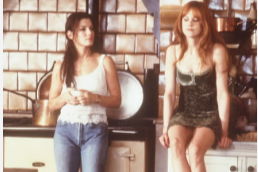
The Sisterly Bond
Sally and Gillian’s bond is unshakeable. When one is in danger, the other feels it. As children, they perform a blood pact to seal their sisterly bond. “My blood. Your blood. Our blood,” they say as they cut their hands and mix their blood to fuse their magical connection. When Sally’s husband dies, Gillian shows up and snaps her back into reality. When Gillian becomes the victim of an abusive boyfriend, Sally drives all night to rescue her (and kill the SOB). All of this stems from the loss of their parents at such a young age; they are each other’s anchor, and their strongest magic comes from their sisterhood. In that is the biggest thematic twist of them all: their love ultimately breaks the Owens curse — at least in the movie.
The book’s sisterly affection is more reflective of a true sibling relationship. Sally and Gillian—and later Antonia and Kylie—love each other, but they don’t necessarily like each other. There’s jealousy and envy of what the other lacks, specifically when it comes to looks or attention from the opposite sex. Resentment is always bubbling beneath the surface, especially when Gillian high-tails it out of the Aunts’ house and disappears for nearly a decade, and the brawls are loud and cutting. Yes, they come to each other’s aid time and time again, but they aren’t exactly happy about it—particularly Sally, who yearns for the normalcy that Gillian is hellbent on running from.
The on-screen depiction—a huge nod to Sandra Bullock and Nicole Kidman—is beautiful and aspirational. Having three sisters myself, I’d prefer the movie relationship, even though the book version is closer to reality.
…but where’s the magic
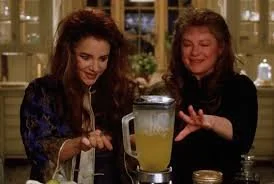
Given the name of the book and movie, a reader would assume there would be an abundance of magic. The movie certainly delivers: love spells, candles lit by blowing on their wicks, snapping ring binders, chickenpox-stricken children as a result of bullying, hauntings and possession from an ex-lover, and enchanted blenders full of midnight margaritas. The Aunts instruct their young nieces in the ways of herbal potions and keeping supernatural balances intact, and relish the natural gifts Sally and Gillian possess. All of it is appealing to the audience, and you’re left yearning to be even a little bit magical.
But outward magic is very much lacking in the book. Sure, we see the desperate scratching of women at the Aunts’ back door begging for potions, and the way men are bewitched or driven mad by the beauty of Gillian—and later Antonia and Kylie—but there is no casting or conservatory filled with herbs for potions. The Owens women are depicted closer to homeopaths or apothecaries than witches with powers. Their neighbors consider them witches and “other,” but more because of their rebuff of societal norms. And unlike the movie, the women don’t acknowledge what they do as “magic,” and Sally doesn’t shelter her daughters from the Aunts’ lifestyle. She leaves their small town a grieving mother wanting a fresh start for her daughters, without stigmas associated with her maiden name—not specifically her “magic.” It was definitely a weird shift.
All of book’s differences were a weird shift. And this is one of the few times I found myself yearning for the movie world and wanting to close the book entirely. Not to say I didn’t enjoy the book; if I didn’t enjoy it, I would’ve abandoned it, which I didn’t. It was a good exercise in separating the two creative endeavors—and one of the few instances of seeing a movie version before I read the book. Once I accepted that the film and the novel are distinct conversations—each with its own priorities, strengths, and compromises—I could relax into the book on its own terms. I found myself appreciating choices the author made even when they diverged from the cinematic blueprint: deeper motivations, quieter scenes that lingered, and an emotional logic that unfolded more slowly. In the end, neither medium invalidated the other; they complemented one another, offering two different ways to inhabit the same story.
Now that I’ve come full circle with the Owens women, I’m really looking forward to all the witchiness in the movie sequel, slated to be released later this year.